The Archive Speaks: What a Maker's Fabric Collection Reveals About Their Creative Soul
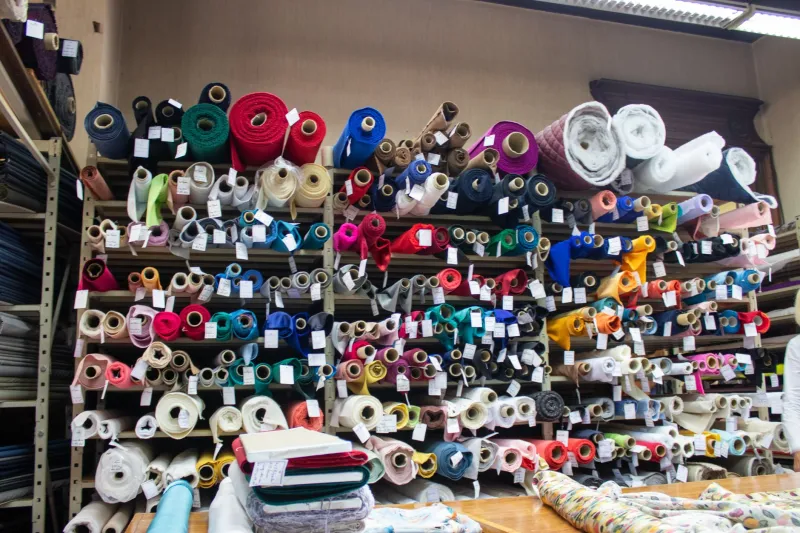
Step into the studio of any maker who has been practicing their craft for more than a decade, and before long you will be directed — sometimes with ceremony, sometimes with the casual ease of a host offering a familiar comfort — toward the fabric archive. It may occupy a purpose-built cabinet of shallow drawers, each labeled in a handwriting that has evolved over the years. It may live in a series of cloth-wrapped bolts arranged along a dedicated wall. In some studios, it fills an entire room, a textile library that functions as both resource and autobiography.
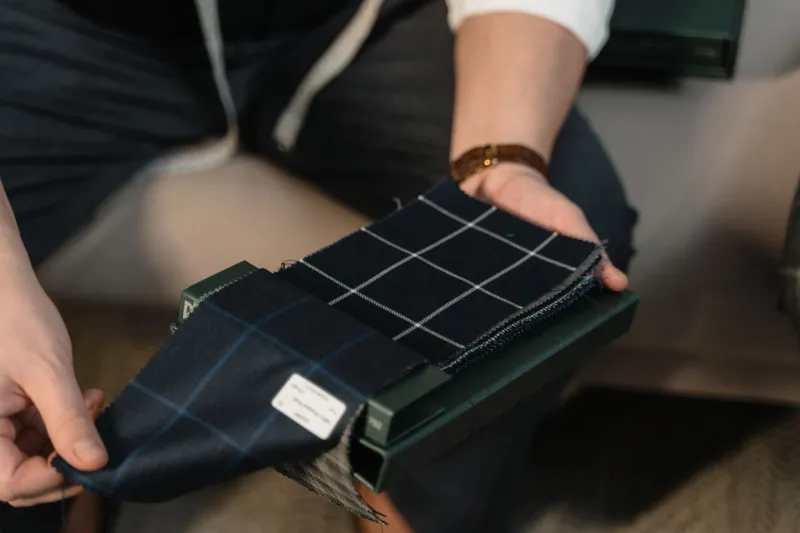
However it is housed, the archive is not a supply closet. It is a record of decisions — of what the maker has sought out, returned to, refused, and gradually come to regard as essential. For the prospective client who takes the time to engage with it seriously, the fabric collection offers something no portfolio image or testimonial can fully convey: an unmediated encounter with a craftsperson's actual values.
The Difference Between Inventory and Archive
Not every studio maintains a fabric archive in the truest sense. Many workrooms operate with functional inventories — rotating stocks of reliable cloths that move in and out based on client demand and seasonal availability. These are practical resources, and there is nothing wrong with them. But they are not the same thing as a curated collection assembled over time according to a coherent aesthetic philosophy.
The distinction is one of intentionality. An inventory answers the question what do clients tend to want? An archive answers a different question entirely: what do I believe in? A maker who has developed a genuine archive has been making choices that were not always commercially convenient — sourcing mills that require minimum orders most small studios cannot easily justify, holding onto cloths that may not be in current demand because they represent something the maker is not yet ready to abandon, and refusing materials that do not meet standards that may be invisible to the casual eye but are entirely legible to an informed one.
At The Studio of Williamson & Curran, the fabric archive is understood as a living document — one that grows and revises itself as our aesthetic thinking evolves, but that also preserves evidence of where that thinking has been.
Reading the Provenance
One of the first things to observe in a maker's archive is where the cloths come from. Sourcing decisions are rarely arbitrary; they reflect relationships, priorities, and a considered understanding of what different textile traditions offer.
A studio whose archive draws heavily from American mills — the surviving woolen producers of the Northeast, the denim weavers of the South and West, the specialty linen and cotton houses that have maintained domestic production through considerable economic pressure — is communicating something about their relationship to craft heritage and regional identity. These are not merely aesthetic choices; they carry ethical and cultural weight.
A collection that incorporates English worsted alongside Japanese selvedge cloth and Italian linen signals a different orientation: an internationalist sensibility that seeks excellence across traditions and is comfortable holding multiple aesthetic vocabularies in productive tension. Neither approach is inherently superior. But each tells a prospective client something meaningful about how the maker thinks, and whether that thinking is likely to be compatible with their own.
Weight, Hand, and the Evidence of Preference
Beyond provenance, the physical character of the cloths in an archive is enormously revealing. Run a hand across the range of weights a maker keeps, and patterns emerge. Does the collection favor substantial, structural fabrics — heavy wools, dense linens, cloths that hold their shape with minimal intervention? Or does it lean toward the fluid and responsive — materials that move with the body, that drape rather than stand?
Neither tendency is simply a matter of technical capability. It reflects a deeper conviction about what clothing is for, and what relationship it should have with the person wearing it. A maker with a strong preference for architecturally structured cloth is likely to produce garments that project a certain formal authority; their aesthetic vocabulary is built around the garment as a constructed object. A maker drawn to fluid, responsive materials tends toward a different ideal — one in which the garment and the body are in continuous conversation, and the cloth's behavior under movement is as important as its appearance at rest.
For a client whose own sense of dress has a particular orientation — who knows whether they feel most themselves in clothing that commands a room or clothing that moves with them through it — this alignment is not a minor consideration. It is foundational.
The Cloths That Never Leave
Perhaps the most instructive section of any serious fabric archive is the one containing materials that are never sold to clients — cloths the maker keeps for their own use, or simply keeps. These are the fabrics that reveal genuine obsession rather than professional competence.
Every maker of depth has them: a bolt of cloth sourced years ago from a mill that has since closed, kept not because it will ever be used but because it represents something — a standard of production, a particular quality of fiber preparation, a color achieved through a dyeing process that no longer exists commercially. Or a length of cloth acquired on a sourcing trip that has never found the right commission but that the maker cannot bring themselves to release, because it continues to speak to something they are still working out.
When a maker shows you these pieces — and the willingness to show them at all is itself a form of professional intimacy — they are offering you access to their interior life as a craftsperson. Pay attention to how they speak about these cloths. The language they use, the memories they invoke, the standards they articulate: this is the truest picture of what they are actually capable of producing, and what they are genuinely striving toward.
Why This Matters Before You Commission
The practical implication of all of this is straightforward: before committing to a bespoke commission of any significance, spend time with the maker's fabric collection. Not as a consumer selecting from a menu, but as someone genuinely trying to understand the aesthetic intelligence behind the curation.
Ask where specific cloths come from and why they were acquired. Ask which materials the maker finds most compelling to work with at present, and which they have moved away from. Ask whether there are cloths in the archive they wish more clients would choose. The answers will tell you more about the maker's current creative thinking than any number of finished photographs.
A bespoke commission is a collaboration, and like any meaningful collaboration, it is best entered with genuine knowledge of your partner's convictions. The fabric archive is where those convictions are stored — quietly, materially, and with an honesty that no other document in the studio quite matches.