Behind the Pattern: What America's Master Craftspeople Wish Every Client Knew
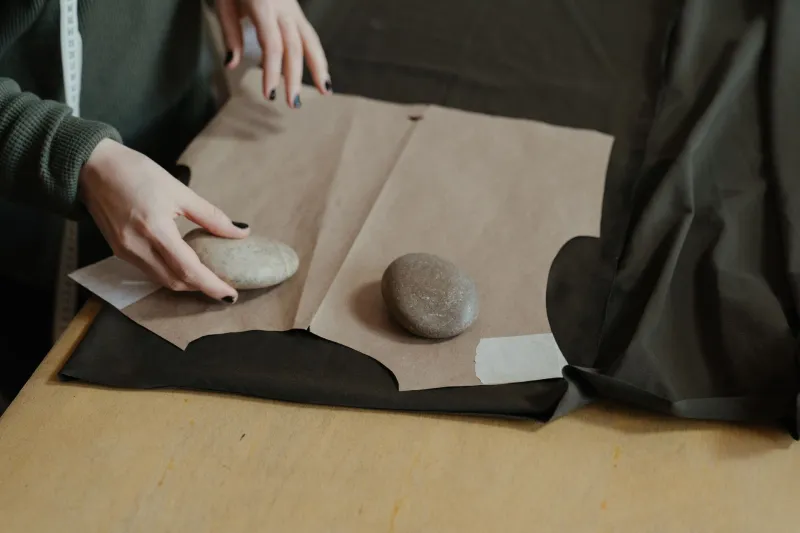
They are rarely photographed. Their names do not appear in the press releases that accompany a finished commission, nor in the social media posts that follow a successful fitting. Yet the patternmakers, seamstresses, and hand-finishers who labor within independent American ateliers are, in the most literal sense, the people who transform a client's aspiration into wearable reality. Their knowledge is particular, accumulated over careers measured in decades rather than seasons, and their perspective on the bespoke process is one that clients almost never have the opportunity to hear.
This feature is an attempt to change that. Over several months, we spoke with master craftspeople at independent studios across the United States—from a third-generation patternmaker in Philadelphia to a specialist hand-finisher in Portland, Oregon, and a seamstress with thirty-two years of couture experience now working from a small atelier in Nashville. Their insights, shared with characteristic directness and occasional humor, illuminate the bespoke process from the side of the workroom table that clients never see.
On What a Good Brief Actually Looks Like
"The clients who make our work better are the ones who come in knowing what feeling they want to achieve, not necessarily what the garment should look like," says one senior patternmaker who has worked in custom production for over twenty years. "When someone says, 'I want to feel authoritative but not unapproachable,' that's something I can work with. When someone comes in with a photograph of a garment that doesn't suit their body type and says, 'Make this,' we have a much harder conversation ahead of us."
This distinction—between communicating an intention and prescribing a solution—emerged consistently across our conversations. Experienced makers understand that clients are not trained designers, and they do not expect them to be. What they do hope for is a client willing to articulate the emotional and functional purpose of a piece before the first measurement is taken.
"I always ask: where will you wear this, and how do you want to feel when you walk into that room?" says a seamstress who specializes in structured women's suiting. "Those two questions tell me almost everything I need to know. The technical decisions—the silhouette, the cloth weight, the construction method—those flow from the answers."
On the Realities of Custom Production
One of the most persistent misunderstandings between clients and makers concerns the nature of time in a bespoke commission. Ready-to-wear retail has conditioned consumers to expect near-immediate gratification, and that expectation, imported into the atelier, creates tension that serves no one.
"A bespoke garment is not a product being retrieved from a warehouse," explains a patternmaker based in Chicago who works primarily with menswear clients. "The pattern is being drafted from scratch. The cloth is being cut by hand. Every seam is being pressed individually. When a client calls two weeks after placing a commission to ask why it isn't ready, I understand the impulse—but I wish they understood what was happening in the interim."
Several makers noted that timeline transparency, established clearly at the outset of a commission, dramatically improves the collaborative experience. When clients understand that a well-made garment requires eight to fourteen weeks—sometimes longer for complex pieces—they tend to engage with the process rather than resist it.
"The waiting period is actually an opportunity," observes the Nashville-based seamstress. "I encourage my clients to use that time to think about whether their initial vision is really what they want. By the time we reach the first fitting, they've often refined their thinking in ways that make the final garment much stronger."
On the Small Decisions That Transform a Piece
In bespoke production, a great many decisions that appear minor to a client carry considerable consequence for the maker. The placement of a pocket, the weight of an interfacing, the choice between a hand-stitched and machine-stitched buttonhole—these are not decorative footnotes. They are structural and aesthetic choices that determine whether a garment performs beautifully or merely adequately.
"Clients often want to approve every detail, which I respect," says the Portland-based hand-finisher. "But occasionally a client will insist on something that I know from experience will compromise the drape or the longevity of the piece. The most productive collaborations are the ones where the client trusts that when I push back, I'm doing so in service of their vision, not against it."
This dynamic—the client as visionary, the maker as technical authority—requires mutual respect to function. Makers who feel their expertise is disregarded tend to become less forthcoming with the candid guidance that elevates a commission. Clients who feel their preferences are overridden tend to disengage from a process that should be deeply personal.
"The best clients I've worked with treat the fitting as a conversation, not an inspection," the Philadelphia patternmaker reflects. "They ask questions. They want to understand why I've made a particular choice. That curiosity makes my work better, because it forces me to articulate decisions I might otherwise make instinctively."
On What Makers Find Most Rewarding—and Most Difficult
Perhaps unexpectedly, the craftspeople we spoke with identified the same quality in their most memorable commissions: genuine collaboration. Not deference, not instruction, but the particular creative energy that emerges when a client's vision and a maker's expertise are genuinely in dialogue.
"There are commissions I think about years later," says the Chicago patternmaker. "Not because they were technically the most complex, but because the client and I were truly building something together. Those pieces feel different when they leave the studio. You can sense it."
What makers find most difficult, they acknowledge with some reluctance, is the commission that arrives without trust—the client who has been disappointed before and arrives armored against that possibility, treating every fitting as a negotiation rather than a collaboration.
"I always want to earn that trust," says the Nashville seamstress. "But it takes time to build, and sometimes a client has been burned badly enough that they can't quite get there. Those are the hardest commissions—not technically, but emotionally. You're trying to do your best work while someone is waiting for you to fail."
The remedy, multiple makers suggested, is straightforward if not always easy: enter the atelier prepared to communicate honestly, ask questions without apology, and extend to your maker the same good faith you hope to receive in return. The garment that results from that posture of openness is almost invariably superior to the one produced under conditions of mutual guardedness.
"We are on the same side," the Portland finisher says simply. "We want this piece to be extraordinary. When the client understands that, everything else becomes easier."