Dressing the Self in Formation: On Commissioning Clothes During Life's Defining Transitions
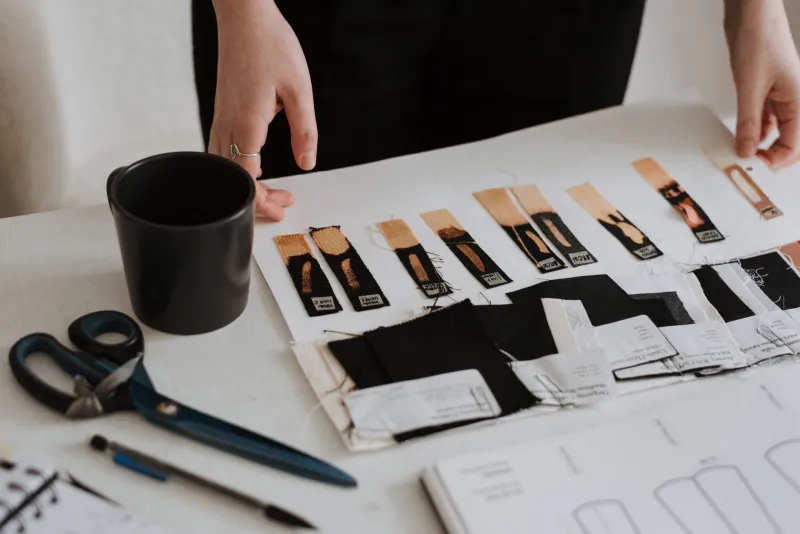
There is a particular kind of client who arrives at the studio not quite knowing what they need. They have a life event to name—a new position of significant responsibility, a city left behind and a new one not yet understood, a relationship that has altered the fundamental architecture of their days. They arrive with something less defined than a commission and something more urgent than a casual inquiry. They arrive, in some sense, to be seen.
This is not an uncommon phenomenon. Among the most meaningful commissions undertaken at studios devoted to bespoke work, a notable number originate not from a wardrobe gap or a social occasion but from a moment of personal transformation. The client does not yet know precisely who they are becoming. What they know, with surprising clarity, is that their existing clothes no longer tell the right story.
The Wardrobe as Self-Portrait
Clothing has always functioned as autobiography. Long before the language of personal branding entered the cultural vocabulary, people understood intuitively that what they wore communicated something essential about who they were, who they wished to be, and who they aspired to become. The bespoke garment, made specifically for one body and one person, intensifies this communicative function. It is not a costume borrowed from a mass-market narrative. It is a statement composed in cloth, cut to the precise dimensions of a singular life.
During periods of transition, this expressive capacity becomes both more necessary and more complicated. The professional who has accepted a leadership role she has worked toward for a decade may find that her existing wardrobe belongs to the person who wanted that role, not the person who now holds it. The man who has relocated from a decade in New York to a quieter life in the Pacific Northwest may discover that his wardrobe carries the visual grammar of a city and an identity he is intentionally leaving behind. The new parent who is renegotiating the terms of professional life, creative ambition, and personal identity simultaneously may find that no existing garment speaks adequately to the person they are in the process of becoming.
In each case, the wardrobe has become a ghost—populated by clothes that once fit not just the body but the life, and that now fit neither with full accuracy.
What the Commission Reveals
Skilled makers at bespoke studios develop, over years of practice, a sensitivity that extends well beyond technical craft. They learn to listen to what a client does not say as carefully as what they do. The woman who describes wanting something "professional but not severe" is communicating something about a professional environment she finds constraining. The man who asks for a garment that is "relaxed but still polished" is often negotiating a tension between two versions of himself that have not yet been fully reconciled.
These are not problems to be solved by cloth selection alone. They are invitations to a more searching conversation about what a garment is meant to do—not simply in functional terms, but in the deeper sense of how it will position its wearer within their own unfolding narrative.
"I always try to ask what a client is moving toward, not just what they're moving away from," one experienced maker observed during our research for this piece. "Because if you only dress the person someone was, or the person they're trying to leave behind, the garment arrives already out of date. You have to make something that has room for who they're becoming."
This is among the most demanding aspects of bespoke work—and among the most rewarding. It requires the maker to hold in mind two versions of a person simultaneously: the one present in the fitting room, and the one gestured toward in the conversation surrounding the commission.
The Psychology of the Forward-Facing Garment
There is a body of psychological research supporting what bespoke makers have long understood intuitively: clothing shapes behavior as much as it reflects it. Studies in what researchers have termed "enclothed cognition" suggest that wearing clothing associated with particular qualities—authority, creativity, care—can measurably influence the wearer's cognitive performance and emotional state. A garment that embodies who you are becoming may, in a genuinely functional sense, help you become that person more fully.
This is not magical thinking. It is a recognition that the objects we choose to inhabit are not passive. They participate in the construction of identity. The bespoke commission, made with intention during a period of transition, is a particularly concentrated version of this phenomenon—a deliberate act of self-authorship undertaken in collaboration with someone whose craft is equal to the ambition.
Clients who approach the commission with this understanding tend to produce, in collaboration with their makers, garments of unusual depth and longevity. They are not chasing a trend or filling a wardrobe gap. They are making a declaration—to themselves as much as to anyone else—about the life they intend to inhabit.
On Allowing the Maker to Witness the Transition
There is an intimacy inherent in bespoke production that distinguishes it from nearly every other commercial transaction. The maker learns the client's body with a precision that few people in a life are permitted. Over the course of multiple fittings, they observe how a client carries themselves, how their posture shifts between appointments, what anxieties and aspirations animate their conversation about cloth and cut.
For clients navigating significant life transitions, this intimacy can be unexpectedly meaningful. The atelier becomes a space in which the transformation underway is witnessed and, through the medium of craft, honored. The garment that emerges from this process carries something of that witnessing within it—a quality of being truly made for the person who commissioned it, at the specific moment in their life when they needed it most.
At Williamson & Curran, we have long believed that the most enduring pieces in a client's wardrobe are rarely the most technically complex. They are the ones made at a turning point—the commission that arrived when a life was in motion, and that helped its wearer find their footing in the new terrain ahead. These garments are not merely clothes. They are, in the fullest sense, companions to a becoming.