Cloth as Chronicle: The Private Language of Fiber in a Bespoke Wardrobe
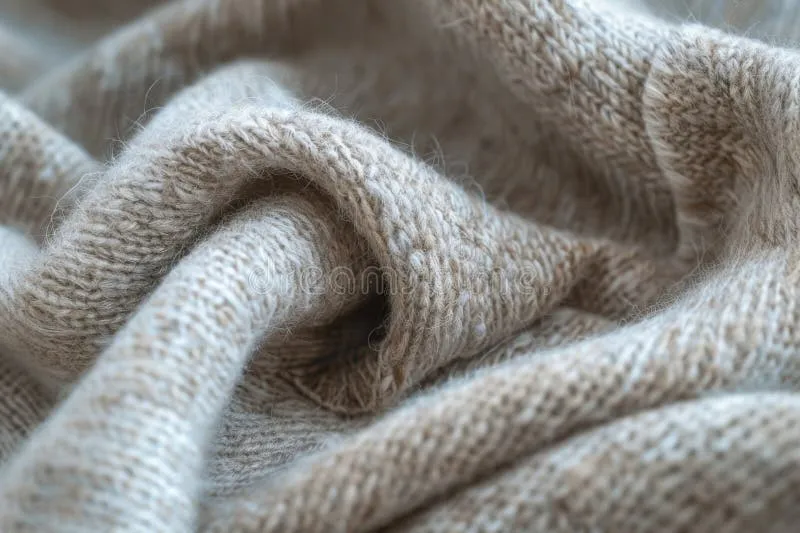
Photo: luxury fabric swatches wool cashmere textile atelier close up, via thumbs.dreamstime.com
There is a moment in every long-standing client relationship when the conversation shifts. The early commissions are navigated with measured vocabulary—swatches are presented, preferences are stated, silhouettes are negotiated. But somewhere after the third or fourth piece, something quieter begins to emerge. The client stops explaining. They simply reach for the cloth they recognize as themselves.
This is the grammar of a bespoke wardrobe taking shape.
At The Studio of Williamson & Curran, we have worked with clients across decades of their lives. What those years reveal, more than any shifting taste in cut or color, is a deeply personal material vocabulary—a recurring set of fibers, weights, and origins that, taken together, read less like a shopping history and more like a memoir.
The First Commissions: Fiber as Aspiration
Most clients arrive with an idea of who they intend to be. That intention, interestingly, tends to express itself through fabric before it ever resolves into a finished garment.
Consider a client we will call Margaret—a corporate attorney from Chicago who first came to us in her late thirties seeking a commission for a presentation suit. She chose a high-twist worsted wool from a Yorkshire mill: crisp, authoritative, with a surface so smooth it seemed almost armored. The fabric was not simply practical. It was a declaration. At that stage of her career, she needed cloth that would not yield, and the worsted delivered exactly that quality of composed resistance.
Five years later, Margaret returned. Her practice had evolved; she had moved from litigation into advisory work. Without any prompting from our studio, she gravitated toward a double-faced cashmere-wool blend—still structured, but with a softness at the surface that the earlier worsted had deliberately refused. The shift in fiber was not a retreat from seriousness. It was a refinement of it. She had nothing left to prove through hardness.
This trajectory—from armored fiber to earned softness—is one we observe with remarkable consistency across our clientele.
Weight as Worldview
If texture is the emotional register of a fabric, weight is its philosophy.
Clients who favor medium-weight cloths—the 11- to 13-ounce worsteds, the substantial linens, the mid-gauge knits—tend to share a particular quality of temperament. They are, as a rule, people who value presence without performance. Their garments occupy a room without demanding it. There is a groundedness in the choice, a preference for substance over spectacle that extends, in our experience, well beyond the wardrobe.
By contrast, those drawn to the extremes of weight tell a different story. The client who insists on the lightest possible tropical wool—nine ounces or under, barely whispering against the skin—often prizes invisibility as a form of authority. They wish to be perceived as effortless. The client who commissions heavy overcoatings in 22-ounce melton or dense tweed is making an entirely opposite declaration: permanence, rootedness, a deliberate rejection of the disposable.
One of our most instructive long-term relationships has been with a New England architect we will refer to as Thomas. Over fifteen years and eleven commissions, Thomas has never once deviated from heavy-weight fabrics. His cloths have included Harris Tweed woven on the Outer Hebrides, a dense double-weave cashmere from a Scottish mill with a history stretching back to the 1820s, and a boiled wool so substantial it functions almost as architecture in its own right. Thomas has told us, on more than one occasion, that he distrusts anything that doesn't hold its shape. His fiber choices are, in this sense, entirely consistent with his professional philosophy—and, one suspects, his personal one as well.
Provenance as Personal Myth
Where a fabric originates matters to our clients in ways that are not always fully articulated, even by the clients themselves.
Provenance functions in bespoke dressing the way terroir functions in wine—as an invisible layer of meaning that alters the experience of the thing itself. A client who repeatedly selects cloths from the Biella region of northern Italy is not simply making a quality judgment, though the quality is real. They are affiliating themselves with a particular tradition of making, a particular set of hands and looms and centuries. The cloth becomes a conduit to something larger than the garment.
We have observed that American clients—perhaps more than their European counterparts—carry a particular emotional investment in provenance. This may reflect a cultural hunger for the kind of deep-rooted craft heritage that the United States, for all its ingenuity, has had less time to accumulate. When a client from San Francisco chooses a cloth woven on the same Donegal looms their grandfather's tailor sourced from, they are not being sentimental. They are constructing a continuity that the speed of American life can otherwise make difficult to sustain.
Other clients choose domestic provenance with equal deliberateness. The American wool revival—small-batch producers in Montana, Vermont, and the Pacific Northwest—has given a new generation of bespoke clients a different kind of myth to inhabit: one of local craft, environmental consciousness, and a reconnection with the land. These clients are writing a different chapter, but they are writing it just as intentionally.
Reading the Wardrobe Backward
Perhaps the most illuminating exercise we undertake at The Studio of Williamson & Curran is the retrospective review—a practice we encourage when a client has accumulated a significant body of commissioned work. Laid out in sequence, the pieces rarely look like a collection of garments. They look like a life.
The young professional's armored worsted gives way to the mid-career cashmere blend. The heavy tweeds of one decade soften into a nuanced flannel as the client's relationship to authority changes. A period of personal disruption often surfaces in an unexpected fabric choice—something unfamiliar, perhaps a linen the client had always dismissed as too casual, suddenly selected with urgency. And then, as equilibrium returns, the familiar fibers reassert themselves, though never quite in their original form.
This is the autobiography that cloth writes: not in broad declarative strokes, but in the accumulated texture of choices made over time, often without full conscious awareness.
The bespoke commission, at its most meaningful, is not simply an agreement to construct a garment. It is an invitation to continue a conversation—one in which the client speaks most honestly not through words, but through the cloth they cannot stop returning to.